Why More Workouts Do Not Equal Better Results

More sessions, more sets, more sweat it feels like the fastest route to visible results. But your body doesn’t build muscle while you’re training; it builds muscle afterward, during the hours you’re not in the gym.
Push your training volume past what your body can actually repair, and you don’t get faster progress, you get stalled progress, or worse, damage that undoes weeks of work.
Recovery is the real multiplier behind your results, and that includes what you refuel with. Dymatize Elite 100% Whey and ISO100 Hydrolyzed both support that repair work once the workout is over.
Here’s why training harder isn’t always training smarter.
Why Recovery Decides Your Results, Not Just Your Reps
Muscle recovery. Every hard session creates microscopic tears in your muscle fibers that’s normal, and it’s actually what triggers growth. The growth itself happens afterward, when your body rebuilds those fibers thicker and stronger using amino acids from protein.
Skip that repair window too often and you interrupt the process before it finishes. This is where a steady protein routine helps: Dymatize Elite 100% Whey’s blend of whey concentrate and isolate is fast-absorbing enough to fit easily into your day in a shake, a smoothie, even baked into a snack so your muscles consistently get the raw material they need to rebuild, not just after your toughest sessions.
Overtraining. When training consistently outpaces recovery, your body can tip into overtraining syndrome (OTS), a state where fatigue, soreness, and performance decline no longer bounce back with a normal day off.
OTS symptoms can linger for weeks, showing up as disrupted sleep, dropping motivation, and even a shrinking appetite right when your body needs fuel most. That’s exactly when a hydrolyzed protein earns its place: ISO100’s whey protein isolate is pre-broken into smaller peptides before you drink it, so it digests and absorbs quickly even when your appetite or digestion is already under pressure getting amino acids to tired muscles without asking more of a strained system.
The damage it causes. Left unchecked, overtraining does more than stall your gains. It raises your risk of repetitive strain injuries, tendinitis, and joint problems, suppresses immune function, and in severe cases can lead to muscle breakdown serious enough to affect kidney function.
Hormonally, it can lower resting testosterone while keeping cortisol elevated both working against the muscle you’re trying to build. Adequate protein intake is one of the most reliable levers you actually control here, and having both a versatile everyday option like Elite 100% Whey and a fast-digesting option like ISO100 for your hardest sessions makes it easier to stay consistent instead of playing catch-up later.
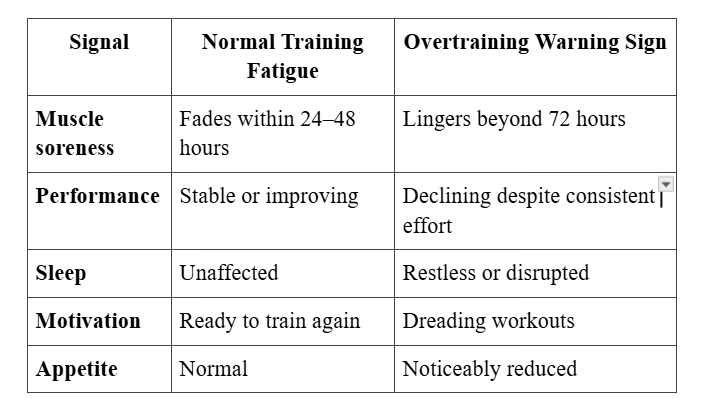
If more than one of these feels familiar, the fix usually isn’t a harder workout, it’s better recovery, starting with rest and proper fuel.
So, How Many Workouts Is Too Many?
There’s no universal number; it depends on intensity, sleep, and how well you’re refueling. The pattern to watch for is simple: if performance is flatlining or dropping despite consistent effort, that’s your body asking for recovery, not more volume. Give the same muscle group about 48 hours before training it again, prioritize sleep, and keep a fast-absorbing protein Elite 100% Whey for daily consistency, ISO100 Hydrolyzed for your toughest sessions part of the routine so recovery isn’t the thing you forget until it’s too late.
FAQs
How do I know if I’m overtraining or just sore?
Normal soreness fades within a couple of days and doesn’t affect performance. Soreness lingering beyond 72 hours, or lifts and times getting worse despite consistent effort, points to overtraining rather than typical fatigue.
Can overtraining actually damage my muscles?
Yes. In serious cases, prolonged overtraining can cause muscle breakdown severe enough to release proteins into the bloodstream and strain the kidneys, along with raising injury risk through repetitive strain and joint stress.
How much protein do I actually need for recovery?
Research generally supports around 1.6 – 2.2g of protein per kg of body weight daily for people training regularly, spread across meals.
What’s the difference between Elite 100% Whey and ISO100 Hydrolyzed? Elite 100% Whey is a fast-absorbing whey blend built for everyday use shakes, smoothies, or snacks. ISO100 is hydrolyzed whey protein isolate, broken down further for even faster absorption, useful after intense sessions or when digestion needs less work to do.
Is rest really more important than training volume?
For most goals, yes. Muscle repair and growth happen during rest, not the workout itself without adequate recovery, added volume can work against you rather than for you.


